
Chris Rea: The Life and Legacy of a Musical Storyteller
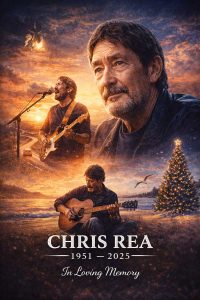
Chris Rea was known for his distinctive voice and expressive guitar playing throughout a career spanning five decades.
Chris Rea was an English singer-songwriter and guitarist whose music connected deeply with listeners around the world. Over a career lasting more than fifty years, he blended elements of rock, blues, pop, and soul into a sound that was both emotionally rich and widely appealing. Rea wrote and recorded numerous songs that became beloved classics, including the seasonal favourite “Driving Home for Christmas.” Tragically, Rea passed away at the age of 74 in December 2025 after a short illness, leaving behind a legacy of music that continues to resonate with fans globally.
Early Life and Musical Beginnings
Rea started playing guitar later than many musicians, picking up the instrument in his early twenties.
Christopher Anton Rea was born on March 4, 1951, in Middlesbrough, in northeast England. He grew up in a working-class family with roots in Italy and Ireland. Music wasn’t his first path after school; instead, he took on various jobs, including helping in his father’s ice cream business. It wasn’t until he was around 21 that Rea picked up a guitar and began to play seriously.
After performing in several local bands, Rea launched his solo career in the mid-1970s. His early work showed his interest in storytelling and melody, traits that would become hallmarks of his music.
Breakthrough and Early Success
Chris Rea’s debut album Whatever Happened to Benny Santini? featured his first major hit.
Rea’s debut album Whatever Happened to Benny Santini? arrived in 1978, and it featured the single “Fool (If You Think It’s Over).” The song became a hit in the United States, earning Rea a Grammy nomination and introducing him to international audiences.
This early success laid the groundwork for a prolific recording career. Over the next decade, Rea steadily built a catalog of songs that combined evocative lyrics with his recognizable gravelly voice and guitar work.
Music Style and Artistic Identity
Rea was particularly renowned for his slide guitar playing and evocative musical style.
Chris Rea’s music defied easy categorization. He drew from blues, soft rock, pop, and soul, creating a sound that was both accessible and emotionally resonant. His voice carried a raw, lived-in quality that made listeners feel every word he sang.
Rea also became known for his slide guitar playing, an expressive technique that added texture and depth to his songs. This became especially prominent in his later albums, reflecting his deep roots in blues music.
Defining Hits: From Road Songs to Christmas Classics
Songs like “On The Beach” and “Josephine” helped define Rea’s signature sound.
In the 1980s and early 1990s, Rea wrote and recorded some of his most enduring songs. Albums like On the Beach and Dancing With Strangers spawned tracks that became fan favourites around the world, such as “On The Beach,” “Josephine,” and “Let’s Dance.” His music often combined nostalgia with sonic warmth, making it relatable to many listeners.
Perhaps the song most synonymous with Chris Rea today is “Driving Home for Christmas.” Originally recorded in the mid-1980s and released in 1988, the tune didn’t explode onto the charts immediately, but over time it became a fixture of holiday playlists and radios each winter. Its themes of travel, warmth, and homecoming struck a chord with audiences around the world.
Another powerful work was “The Road to Hell,” released in 1989. With its darker tone and evocative storytelling, the song offered a more introspective look at life’s frustrations and was a commercial success, helping the album of the same name reach the top of charts in the UK and elsewhere.
Chart Success and Album Legacy
Rea released 25 studio albums over his career, showcasing his evolution as an artist.
Across his career, Chris Rea released 25 studio albums, along with numerous compilations and live recordings. Two of his albums—The Road to Hell (1989) and Auberge (1991)—topped the UK Albums Chart, solidifying his place in British music history.
At times, Rea’s popularity was strongest in Europe, where his blend of storytelling and musicality resonated deeply with fans. Though he never extensively toured the United States, his songs still found listeners through radio play and chart presence.
Personal Challenges and Health Battles
Despite serious health setbacks, Rea continued to pursue music and recording.
Chris Rea’s life wasn’t without hardship. In the early 2000s, he underwent major surgery for pancreatic cancer, a life-altering experience that affected both his health and outlook on life. Later, he suffered a stroke in 2016, which impacted his speech and mobility. Despite these challenges, Rea continued to make music and inspire fans with his resilience and passion.
His determination to keep recording and performing even in difficult circumstances inspired many. Rea’s personal journey became part of the narrative around his music, deepening the emotional connection between his songs and his audience.
Legacy and Cultural Impact
Rea’s music has become part of the soundtrack of people’s lives, especially during the holiday season.
Chris Rea left behind a remarkable legacy. His songs continue to be rediscovered by new generations, and classics like “Driving Home for Christmas” have become embedded in popular culture, especially during the holiday season.
Beyond chart success or sales figures, Rea’s true impact lies in his ability to craft music that feels deeply human. His storytelling, guitar work, and distinctive voice gave listeners a sense of companionship across decades of life changes and world events.
Conclusion: Remembering a Musical Storyteller
Chris Rea’s music lives on, echoing memories and emotions for listeners around the world.
Chris Rea’s journey from a young man picking up a guitar in Middlesbrough to an internationally loved artist is a testament to the power of passion, perseverance, and creative honesty. Through memorable songs, chart-topping albums, and a career that spanned five decades, he gave the world music that will continue to be cherished for years to come.
Though he passed away in December 2025, his songs remain a living part of cultural soundtracks everywhere—especially for those winding down familiar roads during holiday seasons or reminiscing about life’s many journeys.


