
Richard Linklater: A Filmmaker Who Redefined Time, Dialogue, and Human Connection
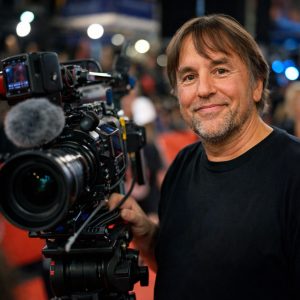
Richard Linklater is one of the most distinctive voices in modern American cinema. Known for his thoughtful dialogue, experimental storytelling, and deep interest in the passage of time, Linklater has built a career that values authenticity over spectacle. His films often focus on ordinary moments, philosophical conversations, and the subtle ways people change over years rather than hours.
Over several decades, Linklater has created a body of work that feels deeply personal yet widely relatable. From low-budget independent films to ambitious long-term projects, he has consistently challenged traditional filmmaking norms while remaining accessible to broad audiences.
Early Life and Creative Foundations
Richard Stuart Linklater was born on July 30, 1960, in Houston, Texas, and grew up across several towns in the state. His upbringing in Texas would later play a significant role in shaping his creative identity. Many of his films are set in the region and reflect its culture, rhythms, and landscapes.
Before entering filmmaking, Linklater developed a strong interest in literature and storytelling. He briefly attended college but eventually left, choosing instead to educate himself through extensive reading and film viewing. During this period, he worked on offshore oil rigs, where long hours gave him time to reflect and read widely.
This self-directed education helped shape Linklater’s unique voice. He was drawn less to plot-heavy narratives and more to conversations, ideas, and character development.
The Birth of an Independent Filmmaker
Linklater made his first major impact with Slacker in 1991. The film followed a loose chain of interconnected characters in Austin, Texas, without a traditional storyline. Its unconventional structure and naturalistic dialogue captured the spirit of a generation and became a defining work of 1990s independent cinema.
Slacker helped establish Austin as a major hub for independent film and introduced Linklater as a filmmaker willing to take creative risks. The film’s success allowed him to pursue future projects without compromising his artistic vision.
Exploring Youth, Conversation, and Time
One of Linklater’s most beloved early films is Dazed and Confused (1993). Set over the course of a single day in 1970s Texas, the film explores teenage life through casual interactions rather than dramatic events. Its ensemble cast and nostalgic tone helped it become a cult classic.
Linklater continued this exploration of everyday life with Before Sunrise (1995), the first film in what would become the Before trilogy. The film follows two strangers, Jesse and Céline, as they walk through Vienna and engage in deep conversations about life, love, and identity.
What made the trilogy remarkable was Linklater’s commitment to real time. Before Sunset (2004) and Before Midnight (2013) were released nine years apart, allowing the characters and actors to age naturally. This approach gave the films emotional depth rarely seen in cinema.
Balancing Art and Accessibility
While Linklater is often associated with independent cinema, he has also successfully worked within mainstream Hollywood. Films like School of Rock (2003) showcased his ability to create commercially successful movies without losing his personal touch. The film’s focus on self-expression and creativity aligned naturally with his broader themes.
He later directed Bernie (2011), Everybody Wants Some!! (2016), and Apollo 10½: A Space Age Childhood (2022), each exploring different eras and tones while maintaining a strong sense of character and place.
Linklater’s versatility allows him to move between genres, including comedy, drama, animation, and experimental film, without becoming confined to a single style.
Boyhood and the Passage of Time
Perhaps Linklater’s most ambitious project is Boyhood (2014). Filmed over twelve years with the same cast, the film follows a boy’s journey from childhood to early adulthood. Rather than relying on dramatic plot twists, Boyhood focuses on everyday experiences that shape a person’s life.
The film was praised for its authenticity and emotional honesty. It received widespread critical acclaim and multiple Academy Award nominations. Boyhood stands as a testament to Linklater’s belief that time itself can be a powerful storytelling tool.
Dialogue as Philosophy
One of Linklater’s defining characteristics is his emphasis on dialogue. Conversations in his films often explore philosophy, politics, art, and personal identity. These exchanges feel natural rather than scripted, reflecting how people actually speak and think.
This focus has earned him comparisons to novelists rather than traditional filmmakers. His characters are not driven by action but by thought, curiosity, and emotional reflection. For many viewers, his films feel less like entertainment and more like shared conversations.
Influence and Legacy
Richard Linklater’s influence extends far beyond his filmography. He has inspired countless filmmakers to prioritize personal storytelling, regional identity, and creative independence. Through his work with the Austin Film Society, he has also supported emerging artists and strengthened the local film community.
His films are often taught in film schools as examples of alternative narrative structures and long-term storytelling. Linklater’s willingness to experiment has expanded the language of cinema itself.


