
The Future Is Voice-Activated: How AI Assistants Are Quietly Taking Over
A decade ago, talking to your devices felt strange—almost something out of a sci-fi movie. Fast forward to today, and we casually ask our phones for directions, tell our speakers to play music, and let AI systems summarize our emails or plan our day. Voice assistants have transitioned from novelty to necessity, embedding themselves quietly but deeply into our routines.
The rise of voice technology isn’t loud or dramatic. It’s subtle. Seamless. Invisible. And because of that, most people don’t even realize how rapidly AI assistants are taking over the way we interact with our world.
Let’s explore how voice assistants are shaping our daily lives—and what the future looks like in a voice-first world.
1. Voice Is Becoming the Next Major User Interface
For decades, we’ve controlled technology through keyboards, mice, and touchscreens. Now? Our voice is stepping into the spotlight.
Speaking is natural. Hands-free. Effortless. You don’t have to be tech-savvy, read instructions, or navigate menus. You simply… talk.
AI language models have dramatically improved, allowing assistants to:
- Understand different accents
- Respond to nuance and context
- Follow multi-step instructions
- Learn personal preferences
Voice is evolving from a convenient option to a major interface. Soon, you won’t browse through settings—you’ll tell your device what you need.
2. Smart Homes Are Becoming Truly Intelligent
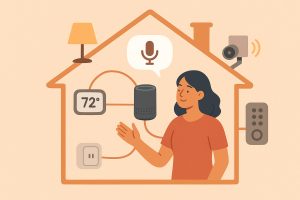
Smart homes used to be fun party tricks. Now they’re turning into complete ecosystems.
You can already say things like:
- “Alexa, lock the front door.”
- “Hey Google, dim the lights.”
- “Siri, start the robot vacuum.”
But this is just the beginning.
Future voice assistants won’t just follow commands—they’ll anticipate them.
Your AI may soon:
- Adjust lighting based on your mood
- Brew coffee when it senses you’re waking up
- Suggest meals based on fridge contents
- Warn you if you left an appliance running
- Set the perfect home temperature before you arrive
The home of the future won’t just be smart—it will be intuitive.
3. Voice Tech Is Transforming Work
Voice technology is making the workplace more efficient, especially as remote and hybrid work becomes the norm.
Today’s AI assistants can:
- Draft full emails in seconds
- Summarize long documents
- Take meeting notes automatically
- Generate reports on command
- Schedule appointments and reminders
- Translate conversations in real time
Imagine ending a meeting and saying:
“Assistant, send the summary to the team and schedule the next check-in.”
Done. Instantly.
Voice assistants are becoming digital co-workers—reliable, fast, and endlessly patient.
4. Voice Integration Is Becoming Standard in Cars

Voice tech is revolutionizing the driving experience.
Most newer cars integrate voice assistants that allow drivers to:
- Navigate hands-free
- Send texts safely
- Call contacts
- Adjust temperature settings
- Choose playlists
- Check traffic and weather
Next-generation vehicles—especially electric and autonomous models—will take voice even further.
Your car might soon:
- Automatically reroute you based on traffic patterns
- Schedule its own maintenance
- Predict when it needs charging
- Set the cabin lighting and temperature to match your preferences
The car is becoming a moving smart device, and your voice is the key.
5. AI Assistants Are Becoming Personal, Not Generic
In the early days, voice assistants responded with canned, robotic replies. But the new generation of AI-driven assistants feels more adaptive, more human, and more personal.
They learn your:
- Daily routines
- Typical commands
- Preferred apps
- Writing tone
- Common destinations
- Lifestyle habits
Imagine an assistant that doesn’t just understand your words, but understands you.
A personal AI that can:
- Draft your message in your writing style
- Suggest the best time to leave for appointments
- Remember your schedule preferences
- Anticipate your weekly shopping needs
This is the future of AI assistance—and it’s coming fast.
6. Voice Tech Is Breaking Barriers in Accessibility
One of the most powerful impacts of voice technology is how it helps people who face challenges with traditional interfaces.
For many, voice assistants are life-changing tools that make it easier to:
- Write messages
- Search the web
- Control devices
- Navigate spaces
- Access important information
Technology is finally becoming more inclusive, and voice plays a major role in that transformation.
7. Security and Privacy Are Catching Up
As voice assistants become more embedded in our daily lives, privacy remains a major concern. The thought of having a device “always listening” can be unsettling.
Tech companies are responding with:
- On-device processing (less data sent to the cloud)
- Voice ID authentication
- Transparent privacy settings
- Easy recording deletion
- Better encryption and local control
Future voice systems will process more information privately and securely on your device, giving users more control and more peace of mind.
8. The Next Leap: AI Assistants That Get Things Done Automatically
Today’s assistants follow commands. Tomorrow’s assistants will execute tasks from start to finish.
Instead of saying:
“Remind me to pay my bills,”
You might say:
“Make sure my bills get paid on time every month.”
Instead of “Find me a flight,” you’ll say:
“Plan my trip for next Thursday. Book the best option and add it to my calendar.”
This is the shift from voice assistants to AI agents—tools that don’t just listen, but take action.


